
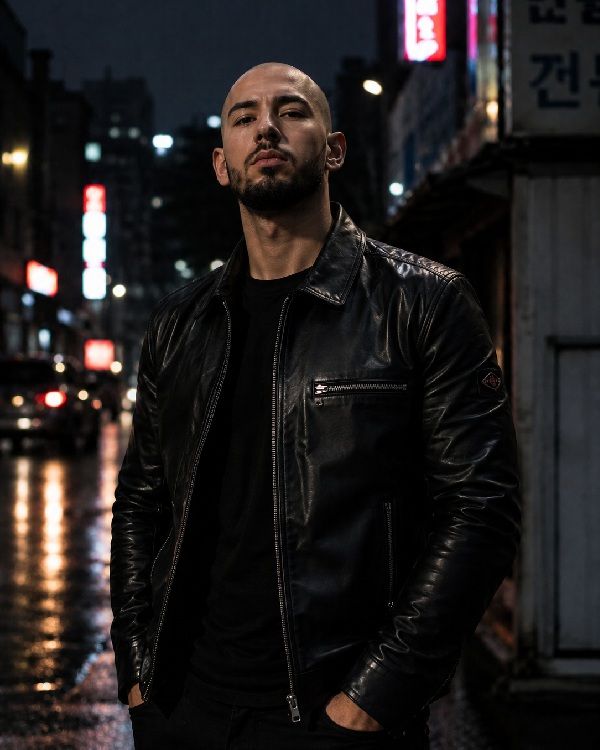
When Controversy Meets Fashion: The Rise of Andrew Tate Style
There's something unsettling about watching a polarizing figure become a fashion reference point. Yet here we are in 2026—scrolling through TikTok, Instagram, and Reddit—finding men deliberately piecing together Andrew Tate-inspired outfits. Not because they endorse everything about the man, but because the silhouette is undeniably compelling. A tailored blazer. Oversized proportions. Rich fabrics that suggest old money. The confidence in how it all sits.
Fashion has always borrowed from unlikely sources. Rock stars. Criminals. Politicians. Antiheroes. The medium doesn't care about the message—it just cares about the visual. And visually, the Andrew Tate aesthetic reads expensive. Calculated. Powerful, whether you buy into that power or not.
This isn't about endorsement. This is about understanding why certain proportions, colors, and fabrics resonate, and how you can wear them without the baggage.
The Anatomy of the Trend: Why It Went Viral
The Andrew tate outfit formula isn't complicated, which is precisely why it spread so fast.
It starts with scale. Everything sits slightly larger than your body. The blazer drowns you a little. The shoulders slope past your natural line. It's borrowed-from-dad energy, but intentional. Architectural. Think Balenciaga-meets-old-school wealth—the kind of person who doesn't need to prove anything because the tailoring does the talking.
Color is the second element. Black dominates. Deep charcoal. Burgundy occasionally. The Andrew Tate palette reads like a billionaire's airport lounge: monochromatic, slightly intimidating, the opposite of loud.
Then there's fabric. Texture matters obsessively here. Wool blend blazers. Leather that's heavy enough to move like a second skin. Sometimes fur trim on jackets. The clothes don't look cheap, and they're supposed to broadcast that immediately. You can't fake this without actually investing in fabric weight.
Finally, proportion. Nothing fits the way normal tailoring dictates. Sleeves are intentionally long. Pants might taper or sit loose—consistency takes a backseat to presence. It's almost defiant in how it disregards traditional menswear rules.
When this formula hit TikTok in late 2024, it didn't matter that the man himself had become a meme. The silhouette transcended the source. Guys in college dorms and penthouses were suddenly bookmarking andrew tate blazer jacket reference photos. Fashion forums exploded with questions about where to source oversized andrew tate suit jacket pieces.
The irony is thick. But that's how trends work. The message gets separated from the medium.
The Jacket Obsession: Which Cuts Rule the Andrew Tate Look
If there's one piece that defines the Andrew Tate aesthetic, it's the jacket. Specifically, oversized tailored pieces that feel expensive the moment you see them.
The Oversized Blazer
This is the foundation. Not a slouchy streetwear blazer—that reads different. We're talking about a tailored jacket cut one or two sizes up. The shoulders sit past your natural shoulder line. The sleeves are long enough that they hit mid-hand. But it's still structured. Still cut with intent.
Real talk: finding the right oversized blazer is harder than it sounds. Most stores don't carry pieces designed to sit this way. Thrift stores sometimes have vintage Armani or Tom Ford pieces that fit the bill. High-end retailers are where you'll find contemporary versions—Comme des Garçons, Acne Studios, Rick Owens if you go that far.
The andrew tate tuxedo aesthetic actually lives here. Not in formal eveningwear. In an oversized tuxedo jacket worn as a casual top. Black silk lapels. Double-breasted cut. Paired with simple black trousers. It reads formal but feels effortless. It's the kind of flex that works because it doesn't try too hard.
The Leather Jacket Renaissance
The andrew tate leather jacket is having a moment unlike anything in the last decade. But again, it's not standard motorcycle leather. It's heavy. Luxurious. Usually black or deep brown. Sometimes with fur trim on the collar—a detail that screams status because fur costs money.
What's changed is the cut. The oversized philosophy applies here too. A leather jacket that actually fits your frame feels stiff and aggressive. One that's a size or two up? That drapes. It moves with your body. It suggests wealth because only people with money can afford to make their clothes less practical.
The tristan tate leather jacket reference—Tristan being Andrew's brother and often cited as having sharper style instincts—tends toward chocolate brown with premium linings. Sometimes animal fur trim. Sometimes minimal hardware. The leather itself reads expensive, which is the whole point.
The Double-Breasted Statement
This might be the most contentious piece in the formula: the tristan tate double breasted suit. Not a standard double-breasted suit. This version is oversized. Almost boxy. The buttons are far apart. It's not a traditional formal silhouette.
Why? Because traditional formal wear is boring. This approach takes something structured and familiar and makes it feel contemporary. Dangerous even. A double-breasted jacket worn without a tie, oversized, in black wool? That reads different than your dad's suit jacket.
The andrew tate white suit plays in a similar sandbox—rare to see in this aesthetic, but when executed, it's pristine. Oversized white linen or a wool blend. No pattern. No texture variation. Just white fabric and confidence. It's a power move because few people can carry off all white without looking like they're dressed for a yacht party.
Trench Coats and Outerwear: Layering the Andrew Tate Way
The tristan tate trench coat has become unexpectedly relevant in this trend. Not the classic Burberry trench your mom owns. A modernized version. Often oversized. Usually black instead of tan. Sometimes rendered in leather instead of gabardine.
This is layering intelligence. A trench coat worn over an oversized blazer. The proportions stack. The silhouettes nest inside each other. It's the kind of outfit that photographs well because there's depth. Visual complexity without pattern or color variation.
The andrew tate mink coat references—luxury fur worn casually—are more extreme and more controversial. Fur is ethically thorny. But it exists in this aesthetic. Usually draped like an oversized topcoat. Sometimes with leather trim. It's excess deliberately displayed because the point is to make people uncomfortable with the wealth gap.
For most people building this look without actual mink or fur, a structured wool overcoat does the job. Heavy wool. Oversized cut. Neutral color. That's the principle translated to something more attainable.
The Robe Question: Blurring Casualwear and Formality
There's a moment in this trend where andrew tate robe (or more accurately, a silk smoking jacket or oversized robe worn as outerwear) entered the conversation. This confused people. Weren't robes for home?
Not in this context. A silk oversized robe worn like a coat is theatrical. It's confidence played as costume. It's about operating outside normal menswear rules so obviously that it circles back around to confidence. Same with the andrew tate python jacket references—exotic leather worn as an over-the-top statement piece.
These are the extremes. The pieces you wear to be noticed, not to fit in. Most people building an Andrew Tate-inspired wardrobe never get here. But understanding the principle helps: in this aesthetic, there's no such thing as too much fabric, too much fabric weight, or too much visual presence.
Practical Styling: Building Your Version Without the Controversy
Okay, so you like the silhouette but want to distance yourself from the source. Smart move. The question is how to build this look.
Start with proportions. Buy blazers one or two sizes up. Let the shoulders sit slightly loose. Length should hit mid-hip instead of the traditional jacket-hem-at-your-knuckles measurement. Sleeve length is negotiable—midi-length sleeves (ending mid-hand) or longer works.
Choose fabric strategically. This look doesn't work with lightweight cotton or linen blazers. You need weight. Wool blends. Cashmere blends for those with budget. Leather obviously. Silk linings that signal quality. The fabric does half the heavy lifting—it's what makes an oversized jacket read "intentional" instead of "I grabbed my dad's closet."
Neutralize your palette. Black, charcoal, burgundy, deep brown, navy. Minimal pattern. The Andrew Tate aesthetic is about silhouette and fabric, not pattern play. If you introduce prints or loud colors, you shift the entire vibe. It becomes costume. The original stays muted because that's how expensive people dress.
Layer intentionally. This isn't about adding random pieces. A turtleneck under an oversized blazer. A subtle chain if that's your energy. Tailored trousers that fit normally (contrast the oversized jacket with fitted bottoms). Or oversized everywhere—that works too, but requires more precision because it can read sloppy.
Invest in finishing pieces. Shoes matter. Black leather loafers. Chelsea boots. Expensive-looking sneakers if you're dressing casual-smart. Belts should be minimal but noticeable—leather, usually black or brown, nothing logo-heavy. Watches should read expensive even if they aren't. A simple chain. These details prevent the look from feeling costume-y.
Own the confidence. This is non-negotiable. An oversized blazer worn like you're uncomfortable looks wrong. Worn like you own it? That's the whole look.
Oversized Versus Fitted: Finding Your Balance
Here's where personal preference actually matters.
The traditional Andrew Tate approach goes full oversized. Everything. Jacket, shirt, pants. It's a total silhouette shift. The advantage is cohesion—everything reads as intentional. The disadvantage is that you're committing hard. You're not blending in.
The smartest evolution (and what most people who aren't trying to look exactly like a polarizing figure are doing) is hybrid proportioning: oversized jacket with fitted or tailored bottoms. This creates visual interest. Movement. The eye travels up and down rather than horizontally. It's more balanced and less costume-y.
Some people go the opposite route: fitted top, oversized bottoms. That's a different energy—less Andrew Tate, more avant-garde streetwear. Less power, more artistic.
The principle to understand: extreme proportions in one direction work. Extreme proportions everywhere require serious confidence and a specific context to pull off. Most people build stronger looks with contrast.
Color Strategy: Why Neutrals Dominate This Trend
Black blazers. Charcoal suits. Burgundy leather jackets (occasionally). Deep brown leather. Navy blazers for the adventurous.
There's a reason the Andrew Tate aesthetic stays neutral: it lets fabric and proportion do the talking. Add a forest green oversized blazer and suddenly people focus on the color instead of the silhouette. Add patterns and you're competing for attention. The look works because it's visually calm while remaining visually powerful.
The andrew tate fur coat references are typically black or dark brown for exactly this reason. The material screams luxury. Adding color feels redundant.
For people building this wardrobe, the strategy is straightforward: buy black, charcoal, and burgundy first. Invest in quality. Experiment with brown once you understand the proportions. Avoid greens, purples, and loud colors until you've mastered the foundation.
Material Masters: Leather, Wool, and Weight
Fabric weight is honestly the secret ingredient nobody talks about. A cheap oversized blazer reads cheap because the fabric hangs wrong. Quality wool with proper weight? That fabric holds shape. It drapes. It moves in a controlled way that reads expensive.
Leather is even more noticeable. Premium leather has a softness that cheap leather never achieves. It breaks in beautifully. It smells good for years. The andrew tate leather jacket references almost always feature premium leather because that's where the quality becomes visually apparent.
Wool blends (wool with cashmere or silk) are the sweet spot for most people. They're expensive without being insane. They age beautifully. They hold color. They feel good on the skin.
For shirts worn under oversized blazers, simple fabrics work best. Plain cotton. Silk knits. Turtlenecks in quality merino. The goal is to let the jacket be the star and have the shirt function as foundation.
Why Andrew Tate Fashion Dominates 2026 Menswear
Let's be honest about the cultural moment. Traditional menswear felt stale. Boring. Safe. The typical advice was fit your clothes properly, follow the rules, don't stand out.
The Andrew Tate aesthetic—whatever its source—rejected that. Oversized blazers are objectively more interesting than fitted ones. Heavy leather reads expensive in a way that cheap cotton never will. The confidence required to wear proportions this extreme is attractive because it suggests you don't care about fitting in.
Fashion trends often reflect what's culturally missing. We wanted drama. Visual risk. The sense that someone was operating outside the rules. This trend delivered that, and it stuck.
It's also democratizing in a weird way. You don't need to be Andrew Tate to wear this. You don't need to be wealthy (though it helps). You need quality fabrics and confidence. You need to understand proportions. You need to commit to the vision.
The other reason it's stuck around: it works across contexts. An oversized blazer works at a club. Works at dinner. Works at a creative meeting. Works at home. It's versatile within a specific lane.
Finding Your Pieces: Shopping the Andrew Tate Aesthetic
This is practical now: where do you actually find these clothes?
High-end retailers carry the concept natively. Comme des Garçons, Acne Studios, Yohji Yamamoto, Rick Owens. These brands think in oversized proportions. The downside is cost. A single blazer can run $800–$2,500.
Thrift stores and vintage shops are goldmines if you know what you're looking for. Old Tom Ford Gucci pieces. Vintage Armani. Vintage wool coats with perfect weight. The advantage is price ($50–$300 per piece). The disadvantage is randomness and inconsistency.
Mid-range fashion has caught up. Brands like COS, Uniqlo (surprisingly good quality), and some contemporary menswear lines now stock oversized blazers and jackets designed to sit this way. Better value than luxury. Not as random as thrift. Quality is solid if not exceptional.
Jacket Craze has emerged as a destination for people building this specific look. The brand focuses on premium outerwear—blazers, leather jackets, structured coats—that understand proportion and fabric. Not knockoffs or costumes. Pieces designed for people who get the proportions and want to execute them properly.
The advantage of a focused retailer: everything works together. Fabrics are curated. Proportions are consistent. You're not playing guessing games about fit. You're buying into a coherent vision.
The Psychology of Power Dressing: Why This Look Feels Dominant
An oversized blazer does something psychological to how you move. You feel bigger. More present. The fabric commands space.
That's not accidental. Fashion that makes you feel powerful literally changes your behavior. You hold yourself differently. You take up more visual real estate. People respond to that confidence whether they realize it or not.
This is worth understanding about the Andrew Tate aesthetic: a big part of its appeal isn't just how it looks on you. It's how it makes you feel. The confidence required to wear these proportions translates into actual confidence in how you move through the world.
That's dangerous if weaponized. It's also the reason the trend persists. People want to feel powerful, and fashion is the fastest way to fake it until you make it.
Common Mistakes: What Kills the Vibe
Mixing scales inconsistently. Oversized blazer with oversized pants with oversized shirt? That works if intentional. Oversized blazer with fitted pants that are too short? That reads wrong. Consistency matters.
Choosing cheap fabrics. You cannot fake this with synthetic blends and cheap wool. The look requires weight and quality. A $100 polyester blazer will look cheap no matter how oversized you make it.
Accessorizing aggressively. Logos ruin it. Bold patterns ruin it. Too many chains ruin it. Keep accessories minimal and understated. The jacket is the statement.
Wearing it ironically. This vibe requires commitment. If you're winking at the audience, they'll feel the insincerity. Wear it like you believe in it, even if you don't fully.
Forgetting the shoes and bottoms. Too many people focus on the blazer and ignore what's below. Cheap sneakers with a luxury blazer? Doesn't work. Cheap trousers? Reads cheap. Proportion and weight apply to everything.
Final Word: The Trend Evolves
The Andrew Tate aesthetic as a pure reference is fading slightly as we move into 2026. But the principles—oversized proportion, fabric quality, neutral palette, strategic layering—are now permanent fixtures in menswear vocabulary.
What's emerging is a refined version. Less about copying a specific person. More about understanding that tailoring rules were made to be broken. That confidence is expressed through proportion as much as through attitude.
If you're building a wardrobe around these principles, focus on foundation: a quality oversized black blazer, good leather jacket, neutral base pieces. Everything else builds from there.
And if you want pieces designed specifically around this aesthetic—proportions understood, fabrics curated, quality assured—Jacket Craze has positioned itself as the retailer for this exact moment. Not costume. Not trend-chasing. Just well-made outerwear designed for people who understand that how clothes fit is as important as the clothes themselves.
The fashion pendulum swings. Right now, it's swinging toward proportion, presence, and refusal to fit in.
Wear accordingly.
FAQ
Q: Can I wear this look without looking like I'm copying Andrew Tate?
A: Absolutely. The silhouette is now separated from the source. Focus on quality fabrics, proper proportions, and confidence. Add your own details—different colors, accessories, styling choices. It becomes your interpretation.
Q: What's the most accessible piece to start with?
A: An oversized wool blazer in black or charcoal. Look at thrift stores first ($50–$200) to test the proportions without huge investment. Once you understand how it should sit, invest in quality.
Q: Do I need expensive brands to make this work?
A: Not necessarily. You need good fabric weight and proper proportions. That can come from mid-range brands, vintage pieces, or luxury. Focus on how it feels and how it drapes, not the label.
Q: How do I style this for different occasions?
A: Business casual: oversized blazer with tailored trousers and a simple shirt. Creative/Club: oversized blazer with dark jeans and boots. Formal: oversized double-breasted jacket with tailored black pants and minimal accessories. The jacket adapts; the principle stays the same.
Q: Is this a long-term trend or a flash in the pan?A: The proportions and principles have staying power. The reference to the original source will fade. You're not investing in trend—you're investing in pieces that fundamentally change how menswear can be interpreted.